I've just got finished getting my initial version of "D&D Thoughts" down on paper (or rather down online), and I wanted to switch gears and get down what I think the Next RPG should be, which just so happens to be the system I've been working on, but I want to go a little more into what exactly are the problems that I've attempted to fix.
First off I think the conflict resolution is critical to any game, and that the resolution should default to the dice ultimately defining success or failure. I think the best combat mechanic should be something similar to what skirmish system use. I my opinion most RP systems fail to produce what I think combat should be, which is a scary deadly event that should be avoided except when the odds are greatly in your favor.
Most RPG both tabletop and computer/console revolve around the players killing essentially legions of enemies, or even if they lean toward fewer battles the also tend to lessen the impact of any given round, by making the damage sustained in a given round a small fraction of a creatures overall health.
On the opposite end of this spectrum are the war-games where they are dealing with possibly 100 vs 100 opponents, where they need much faster resolution, but these games are not concerned with the contributions of individual combatants, they are all about squad vs squad rolls...there are simply too many units on the field to place too much focus on individuals, but they do demonstrate how deadly combat can be.
The systems that seem to have the correct focus are the tactical skirmish systems. In these their is enough troops on the field that they can't be over concerned about allowing individual heroics to play too great a roll, they minimize the offensive and defensive rolling to get to the resolution as fast as possible, they seem to have the correct amount to deadliness in them to get to the final resolution of the battle as quickly as possible, and yet the stronger side does typically prevail against the weaker opponent.
This is what I think should be pulled into more RP system mechanics. Too often the attack rolls miss or are blocked completely round after round, with in my mind seem like unnecessary dice rolling, the purpose of combat is to come to a resolution and move on. When the hit points or resistances of the defenders are such that it's going to take 20 rounds of rolling to determine who will win, than something is wrong.
I believe a good RP system should adopt a skirmish battle mechanic, what this does is combine the best of both worlds as far as individual contributions and getting to overall resolution. Combat needs to be deadly for it to have any meaning, so there's nothing wrong with a weaker opponent beating a stronger one...there's a lot of things that can be considered in a battle. The dice attempt to make a guess at the probability, but once the dice are determined then the outcome needs to be determined by their result.
Heroes will have special abilities that allow them to cut through some of the randomness of battle, the odds have to be in a hero's favor or they would never engage, after all how many times can one realistically beat a 50/50 scenario.
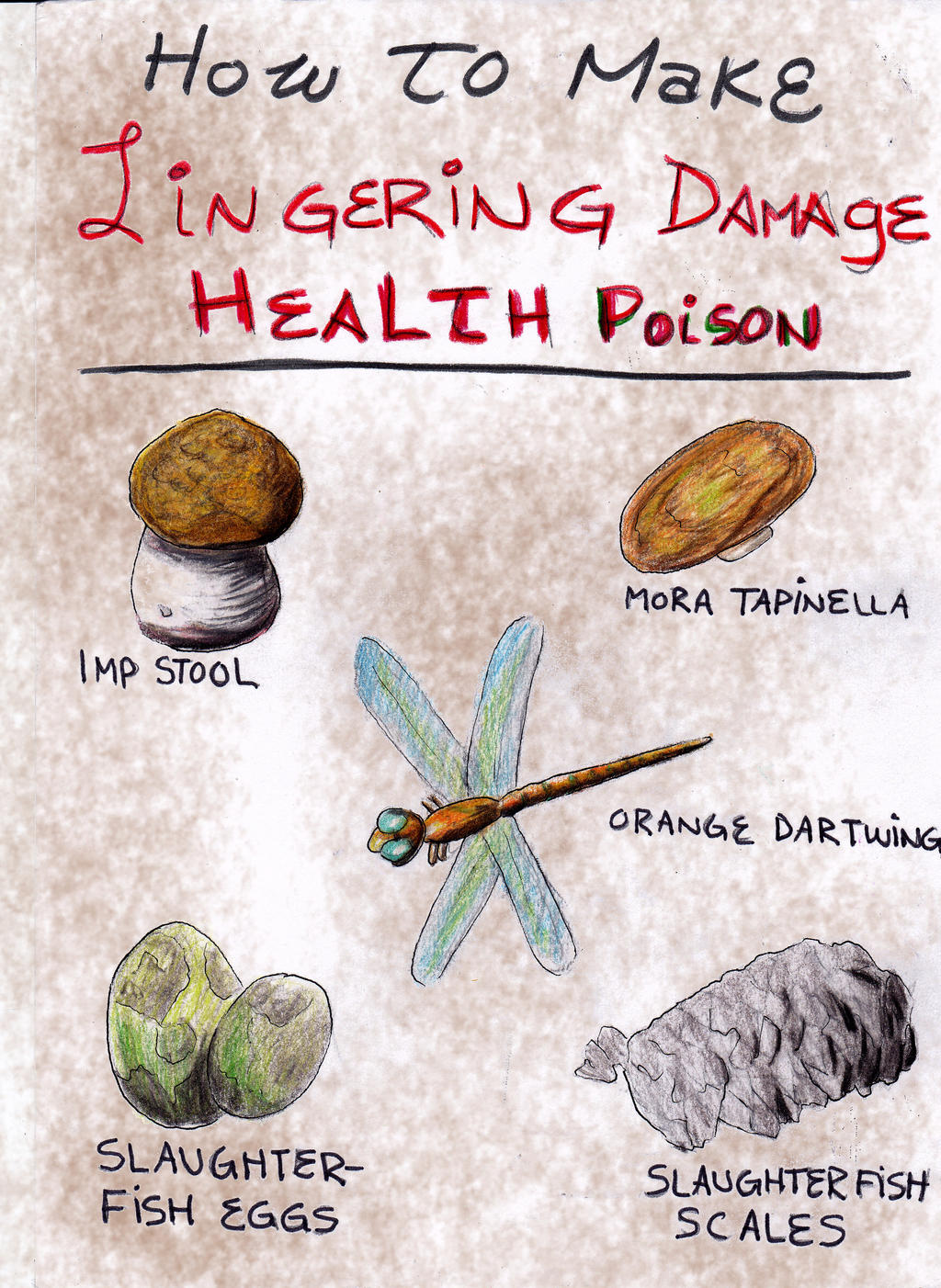
This takes me to my second point, which is "Damage hurts". Knowing that combat is deadly, but heroes have their ways of bending the odds in their favor, however lasting damage needs to be another equalizer in the grand scheme of things. When five minutes after a battle everyone is back up to full strength it takes away another whole aspect of the game.
Having damage linger around for hours can represent fatigue, for days can represent significant wounds, and for weeks can represent broken limbs or possibly some extraordinarily vile effect. When damage always recovery quickly it removes the ability to represent in game terms wounds or broken limbs.
Also if damage comes back too quickly, it completely negates the point of weaker opponents to be encountered. If a creature has almost zero chance of killing the heroes, but their damage lingers, now the opponent has a purpose...the party may have to rotate around who is going to be defending if they want everyone to make it to the end. It becomes more of an endurance contest, without lingering damage it completely removes these types of adventure scenarios from play.
Lastly, rolls must be made with a pool of dice, its the only way to account for both extremely difficult and extremely easy tasks. It's tough to account for odds in less than a 5% chance accurately without using a pool of dice, even d% most often are really only a d10 (if you have a 45% chance of success and if the ten's place is anything except a 4 you don't need the second dice, or if the 00 = 100 then you always need to roll the second die if the first comes up a 0).
When a task is easy the more dice that are rolled puts the odds of rolling average at a higher percentage, for example typical attributes are randomly generated using 3d6, which means only 1 in 216 will have and 18 or a 3, but your chance of having at least a 10 are about 50/50.
The addition of exploding dice (when a dice rolls the maximum number it gets to be rolled again, with continual rolling allowed so long as it rolls maximum) allows for those extremely difficult rolls to be made even when the chances of success are very small.
When a dice pool is rolled you can use the results to help craft an explanation of the results, especially true if certain dice were added for certain random effects. For example some dice might represent you skill in battle, other my represent you weapon, other the opponents armor and other good or bad might have been added for environmental effects. In which case the results for each type of die can be summarized, for example you might be able to say, "Even though I hit them in the dead center of their breastplate where their armor was thickest, my skill with the blade was able to drive the weapon right through."
Dice pools also aid in contests where the warrior may be rolling 6 dice vs a wizard that may only be rolling 1 or 2 dice, but even with that there is a chance (especially with exploding dice) that the wizard might be able to beat the warrior in a test of strength. In which case you could likely chalk up the wizards victory to a well timed distraction that gave him the victory.
These are all things that all versions of D&D and Pathfinder fail at, which is ultimately the reason why I've felt the need to craft my own game mechanics to take these and more into account. Ultimately, I felt the need for dice pool based skirmish mechanics that allowed for fast and deadly combat resolution with possible lingering effects from encounter to encounter.
Friday, March 7, 2014
D&D Thoughts
I know it's been a while since I wrote, but I recently saw a post from a fellow game designer in a forum asking if any of us kept a design journal, I thought about the post and realized that's essentially what I do when I write entries for my blog.
It does help to get the thought down by writing them on the blog, even if no one I know ever sees them written, I know that somewhere someone is going to stumble across the topic and may be stirred up enough to ask me a question, which in turn will re-invigorate me.
Lately I've been DMing a D&D Next campaign, The Ghosts of Dragonspear Castle (GoDs for short). To make things easy and to see if they've addressed the high level game mechanics I have been allowing the party to level after each and every session. Which next time will be our 9th session, so the campaign is right around 50 hours long at this point, my estimation is that we'll wrap up about the 10th session.
I have really enjoyed the module, it is way more deadly than any 4E adventure that I've seen, not that I never saw a TPK in 4E, but this adventure has a number for situations that if a player makes the wrong decision, they will likely die, and most likely take the party with them. It's this feeling that gives me a nostalgic feeling while playing it.
I did like 4E, but always felt that it was flawed at its core...but it didn't stop me from playing it, I just realized that I have over 400 hours or recorded 4E sessions, 100 hours was a single campaign which took the party from 1st level to 9th level, before the met there end in a dragons lair. Another 80 hours was Revenge of the Giants, where we started at level 13 and played through level 18, we ended up rushing through the end of that adventure, most other campaign were 30 to 50 hours combined with probably 80 hours of Gameday/One-Off adventures.
I've heard many people bitch about how bad 4E was, but when it comes down to it, I find out that most of them have never even played it, they are just going off of "what they heard". This really annoys me, I really wanted to like it, and in the end I think I had it figured out...if you read my Hardcore 4E guidelines where I discuss changes to "fix" it, and I think if one would adopt my incremental leveling as well, it does make for a near ideal RP system.
The flaws that remain can only be fixed by going away from the d20 mechanic to more of a dice pool, and to limit the class choices...some of the non-PHB1 classes were simply too over powered. Though even the classes that are over powered in traditional 4E might be balanced by adopting the other rules that I outline.
With D&D Next I feel the sweet spot is still in the levels 3rd to 6th, as it was with both 1st ed and 2nd ed for the game. Even at this, I felt like the resistances and vulnerabilities for many creatures needed on the fly adjustment by me to "make logical sense", and in many cases the heroes were over powered. By this I mean that they seems to give the strikers (I know the traditional definition is not there for these classes in D&D Next, but the classes still serve the same role in D&D Next as they did in 4E) a bonus d6 or 2d6 for nearly every attack, and monsters seldom received similar adjustments.
I don't mind the bonus damage that the heroes gained in Next, but I think the HP of the creatures should be increased (especially larger creatures), and most should get a similar damage modifier when attacking the party...And as with nearly every edition, damage is simply too short lived...Am I the only one the feels if the whole party is near death, it should take longer than a single day to recovery from this?
My favorite things about Next is the fact that To-Hit bonuses have been reduced, as well as AC are much lower, and the best part is that AC no longer increases as a creature levels. I also like the new Attune rules for magic items, and that leveling is typically a very quick ordeal.
Game Components and Design
The Game Crafters (https://www.thegamecrafter.com/) have been coming out with a few new products, and even thought I wish they would increase the quality of their items, by providing plastic or die-cast parts or even chip board or thicker mats, I do love the one-stop shop, and easy to upload and arrange products.
Their interface makes uploading and arranging images onto mats and cards a breeze, and I've never had a mix up with the design, so far as what I told them I wanted and the items that I actually received.
I know I could do my design on blank cards with no art and rough it out more before I go to print, but they honestly make things so easy that I typically go directly from text to a mock-up of what I want to print, then during play testing I mark up my printed versions with notes that I later transcribe to the final draft.
Despite their large selection of components, I really wish that other component creators would table them to get their items into the Game Crafters store, but this goes a little back to my quality beef. The components offered are definitely above the basic requirements, but not something that is going to impress gamers that that played with Fantasy Flight (http://www.fantasyflightgames.com/) or other high end game developer's components.
I'm building up a pretty decent collection of proto-type games that if I had more time these would be awesome game design idea generating items, but as it is, I typically go back to Photoshop and re-do entire decks over a coloring issue, rather than using what I have to iron out the game-play mechanics.
As an example of this, I've recently re-did all the graphics for the Dun-Jion game, using The Game Crafters new 5" hex mat, the tiles are now what I'd wanted at the start, and I switched from Shards to the 1.25" tokens with stickers on them for most the other game components, including Room Tokens, Door Tokens, and Monster Pogs.
I typically struggle with what to keep in and what to pull out as far as components that might be required, and what might be better placed in an expansion or simply removed. This is another reason why my stock pile of components continually grows, as I tend to over create thinking that play-testing will weed them out, and since I've never gone to mass market with any of my designs it doesn't matter if a game costs $15 or $50, when it's a one time purchase of something that I've created, and many of the components could have other uses in future ideas as well.
Below is a list of other component manufactures that have components of high value than Game Crafters, but you'll not only pay more for the components, you'll likely have to shop around as well:
Hopefully you find these handy.
Thursday, March 6, 2014
TableScript
Early February I decided I needed a nice JavaScript project, so I decided to rewrite an old c# application that I had made that was based off of the TableSmith application. This allows very intricate random tables to be created that can reference sub-tables, which can further reference other tables.
A simple example of this would be a wilderness encounter table where a d8+d12 would be rolled to determine what type of random encounter has occurred. There might a 10% chance of an encounter that is rolled three times per day, so that may as well be all linked together in the following script:
:Start
1,[PossibleEncounter]
_[PossibleEncounter]
:PossibleEncounter
1-9,No Encounter
10,[RollEncounter={d8+d12}]
:RollEncounter
1-3,[VeryRareEncounter]
4-6,[RareEncounter]
7-8,[UncommonEncounter]
9-12,[CommonEncounter]
13-14,[UncommonEncounter]
15-18,[RareEncounter]
19-20,[VeryRareEncounter]
Where CommonEncounter, UncommonEncounter, RareEncounter, VeryRareEncounter tables would all still need to be defined. In the above example each roll on the Start table will cause three rolls to occur on the PossibleEncounter table, which in turn only has a 1 in 10 chance of generating an encounter. In case of an encounter we are overriding the default behavior by passing in the dice that the table should be using, if the {d8+d12} was left off the behavior would simply be to roll 1d20 and use that result. By overriding this we get a more bell shaped distribution with the common encounters at the center, and the more rare ones on either end. Notice that even though a 1 is never allowed in our case, we still need to pad the table with it since it always assumes tables begin with 1.
My goal was to recreate this in Javascript, and due to the forgiving nature of the Javascript language I completed the project in about 8 hours, with less than 1/10 of the code I had in C#. This made me question my C# design with was a bit clunky and somewhat slow considering what it should be doing most of the time.
I realized that my Javascript implementation was less than idea, as every table would have to be retrieved dynamically from the server, which was possible with some Ajax calls, but not only was this slow, it required more plumbing than I wanted the client to have to deal with. I envisioned an exposed API where a client would call a table and the API would return a fully resolved random answer.
So, I threw away my previous version and used my Javascript version as the template for my new Server-Side version, which took about 3 times the code of the javascript version, but only took another 16 hours to get working. Then another 16 hours to implement every common TableSmith function and to debug a performance issue.
My TableScript seems to now have all the capabilities of the original TableSmith application and is wired up to a database which stores a library of tables that allow a script to leverage any table within the database. The tables all have a fully qualified name, which must be used if a table has generic name, but it will attempt to look up a table by its friendly name with a few strategies, which in most cases will find the correct table.
After all this I realized the reason I stopped using TableSmith was not wanting to haul a laptop to the gaming table, but I thought that what I had here would be usable by a simple webpage that a smart phone could access easily from the gaming table, though I still prefer to do my "prepping" in advance, some things such as loot or NPC names or the shop inventory could easily be randomly generated at the table.
I figured the creator of TableSmith might have done something similar to what I'd whipped up in about a week and found these:
Mythosa - TableSmith
http://www.tablesmithonline.com/
Where the KickStarter from last year failed to reach it's funding goal, but seemed to have a decent following, as I know the original TableSmith application did as well. I also found a few other sites that implemented common TableSmith tables, but essentially re-wrote them in Javascript to generate the results.
The goal is to expose my global tables via an API that is usable by everyone, and those with more ambition can create an account an setup their own tables, written in TableScript that will also be expose via another API. At this time, I'm debating on keeping these user defined tables private, but only through obfuscation, if a user wants to share a link to some useful tables that they created, then it would be accessible to all with the link.
Also, I've started a dialog with the guy behind the KickStarter, who is open to finishing the frontend demoed on the KickStarter, that would be wired to my backend. I just need to get my API site hosted someplace, currently looking at Azure as it seems very reasonable...at least in the short term, as I have $150 a month in free MSDN Azure hosting.
Monday, April 22, 2013
Hard Core 4E D&D
For my 4E readers, I'm posting this old DM Guideline for what I called "fixing 4E", see what you think.
Rest and Recovery (Revised)
The recovery system in 4th edition DnD is such that you simply can't have a single "All-Out" battle, characters simply can't tap into more than a handful of surges, which means beyond any Daily Powers that they've spent in the battle and a few surges, after a 5 minute rest they are back ready to do this again. There are few long term effects that linger after a battle is over, and the party returns to full strength too rapidly. In previous editions this might have been too extreme in the other direction, where even at 10th level you would only recover a d6 Hps in an overnight rest, though complete recovery in a 6 hour (4 hour for many races) rest seems too quick...I realize that the character are heroes but so were the characters in previous editions, and the fact that a party may have to rest a few days after an epic battle with a dragon didn't seem to blemish their "Hero" status...I 4th Edition a party could do an Epic battle every day for a week or more and never suffering any fatigue after they wake up the following day.
This causes DM's to be creative in ways to simulate an exhausting or difficult journey on the way to a remote dungeon. For the party there are no Game Effects for marching 3 weeks through a swamp, then up the side of a 10,000 foot cliff to battle a dragon in it's lair, even if every day of the journey involved a number of battles with Ogres, Trolls, or Giants...So long as they survive the encounter and get their extended rest, the next day they are bright-eyed and bushy tailed ready to face the days next encounters. The DM is reduced to arbitrary Healing Surge losses, or Endurance checks resulting in more Healing Surge losses or failure to get the effect of the last extended rest, even these penalties may not have any effect on an encounter where a Fighter with 13 Healing Surges, even if they suffered a lose of 7 surges, the 6 they have remaining would be difficult to expend in a single encounter without multiple potions or powers that grant addition surges to be spent.
Addition to little long term effect, the continuous battles that the DM throws at a party might have little long term negative effects, but a weeks journey with semi-difficult encounters every day will surely rocket the party up levels. The results of this will cause the party to gain multiple levels, in a few days of game time. So, The party may leave town 3rd level then a week later come back at 5th, only to do a similar feat and maybe two weeks later have already gained an additional two levels. So, in less than a month of game time they will have gone from battles where goblins would be challenging, to taking down ogres. That's one hell of an training program...This makes recurring NPC opponents or party foes to have to undergo a similar transformation, and begs the question what was the character doing for the last 18 years, when in the past few months they may have gone from 1st level to 8th.
Hardcore Mode
In comes the solution, by essentially shifting Powers up a level, i.e. making Encounter Powers to Daily Powers and Daily Powers to near Weekly Powers, this can solve many of the issues about recovery time being too fast, as well as slowing level progression (in game time, not play time). With this "Simple" change the DM now has the option to have multiple encounters that are essentially chained together (no "Short-Rest" between them), and additionally stack more encounters into what would have previously been a day ("Extended-Rest") previously. Obviously other changes need to happen in game terms to make this game mechanics game, these will all be addressed below.
Healing and Healing Surges
Healing Surges are viewed as sort of a global currency for characters stamina and health, so in addition to being able to spend these for healing a character can spend a Healing Surge as a mechanism to recharge Encounter Powers, or two Healing Surges to recharge a Daily Power. Also, In core 4e rules, every character can spend as many healing surges as they want in the 5 minute Short-Rest that follows an encounter. In Hardcore, Healing Surges can be spent at the rate of one per hour, outside of those granted by using 2nd Wind or character Powers.
The recharging of powers can only be done in the period between encounters, i.e. if a Cleric uses Healing Word on your character, you can not use the granted expenditure of a Healing Surge to recharge an Encounter Power. However, continually recharging powers this way (outside of a Short-Rest) will severely limit a characters healing potential, since Healing Surges are only replenished upon the completion of an Extended-Rest. Note, that once a Healing Surge is spent to recharge a Power, it can not be regained even if the Party continues on to get an Short-Rest.
Short-Rest (Redefined)
By increasing a "Short-Rest" to a 6 hour period, it is instantly apparent that most adventures, especially the Dungeon Crawl type, have developed encounters assuming that the Party is coming into these with all there other Encounter Powers. In Hardcore Mode, it's as if the party is running from battle to battle with no rest between them, which they essentially will be, since there is no benefit to resting until they can get a 6 hour block of time in order to recover their Encounter Powers.
Simply running a typical 4e Adventure in Hardcore Mode would inevitably result the death of the part (a.k.a...Total Party Kill, TPK). Players used to Hardcore mode will be more conservative with their powers, so they may not use them when they could have ended a battle early thinking it best to save them, which could lead to them taking additional damage, or players not used to Hardcore may expend their powers too recklessly resulting in not having any special powers in later encounters. Ultimately the DM will need to alter the adventure continuity, think more like earlier editions of DnD or Pathfinder, smaller more frequent battles.
Often, adventures are geared to Min-Maxed characters, so they often include nearly every Encounter being the party level or up to 3 levels higher. Encounters are most often adjusted by the DM by removing combatants from the opponents side to adjust the encounter level to 1 or 2 level beneath the party level. Remember in Hardcore, every battle is relevant even one goblin jumping out firing an arrow that does 5 damage, is 5 damage that the character will have going into the next battle, so while getting used to Hardcore, its better to err on the "Too Easy" side than "Too Hard". If encounters are simply not being as effective as the DM planned, then this can be easily rectified by maybe not reducing the next encounter by as much.
Since the incentive to rest is largely taken away from the party, and battles are smaller and easier the party can do more with their At-Will powers, and will need to be smart about their Encounter and Daily Powers and use them when "good enough" situation comes up to attempt to maximize their effectiveness, such to ultimately end battles sooner, thus reducing the damage that the party will carry into the next encounter.
Extended-Rest (Redefined)
If Short-Rest is 6 hours then what happens to the Extended-Rest? Well, this is redefined as the Party's "Weekend Off", so only after 48 hours of rest does te Party recover their Daily Powers. This may seem a bit unfair, especially to the players, but this ultimately has little bearing on game play for most typical adventures. This being most are designed as a single shot from a Party's perspective, they know its going to be done without an Extended-Rest so the Party is typically conservative on their Daily Powers anyway. So, if they go out complete 3 to 5 (typical crawl) then come back to town and rest it's doesn't matter how long they stay and wait for the next adventure to fall in their lap, or if the adventure is designed such that there is an extended rest in the middle, then it doesn't really matter if its one nights rest or two...if the Party has time to take a break, then they have time to take a break.
What this redefinition allows for is a much more flexible adventure design scenario. Rather than skipping the journey (or doing this as a skill challenge) and then ending with a 2 to 4 Encounter crawl ending with the climatic "Boss Battle". The DM can now integrate the journey as part of the adventures encounters. A skill challenge can still be used, but success or failure along the way could determine which encounters they face before arriving at the dungeon site. Then the Dungeon could essentially be much more exploitation with maybe 2 or 3 encounters, or even just a single climatic battle.
Typically, a "Boss Battle" is required to be at least 2 levels higher than the party, and if the party is full power (All Daily Powers and some potions) they can win battles up to 5 levels higher if well played. In Hardcore, even having two minor battles before the "Boss" would make an encounter of the Party's level be difficult.
The effects from battle to battle and day to day are not so easily wiped away by a rest that it takes less of an encounter to have an effect and little artificial urgency tactics need to be applied to the Party. While running core 4e adventures as the DM I found the need to always have to create a sense of urgency, as if I didn't the Party always wanted to extended rest, nearly after each battle. This required more work on the story lines as a DM, and always interrupting their rest attempts. In Hardcore, there is no need for create these "hurry-up" story lines, since the Party realizes that them getting a 6 hour rest, or a 48 hour rest may not be likely, so they tend to hurry up themselves, as the less time they are out in the wilds the less encounters that they will face, and since every encounter has lasting effects, they are self motivated to hurry.
Player Complaints..."All I can do is At-Wills...I guess I'll At-Will, again"
When a DM decides to run a campaign in Hardcore mode, the common complaint for players is "All they get to do now is use At-Will Powers". However, to help alleviate this argument, i.e. stop the whining, to allow all non-level based Encounter Powers to return every encounter, triggered on Initiative being rolled. These would include the Class Features that are Encounter Powers as well as Racial Powers and the initial bonus Theme Encounter Power. This still restricts the use of all higher level powers, but provides Class and Race feeling to the character, so that these typically stronger abilities are the most often used by the characters. Note, this typically includes the returning of 2nd Wind to characters as well each encounter, as this is a non-level based Encounter Power.
In this model DMs that have when out of their way to break an Adventure into may small encounters may want to chain these battles together, as the triggering mechanism for restoring the non-level based encounters is the rolling on initiative. So to avoid this creatures from the next area could hear the battle or be warned via an alert of the near-by battle and come to join in. Doing so the new arrivals would roll initiative when they enter the fray, but the party keeps their current initiative, thus not re-gaining any used powers.
Action Token
Characters still begin following every Extended Rest with a single Action Token, even if they previously had accumulated more. As per Core 4e rules Action Tokens can be spent to gain a character an extra Standard Action during an encounter (only once per encounter by characters). Upon achieving a Milestone or other event that would have traditionally awarded the character an Action Token, the character can alternately instantly recharge an Encounter Power that is currently exhausted or even recharge one Healing Surge to the character.
The ability to recharge Healing Surges in this fashion can be used by a DM on a particularly difficult Dungeon Crawl or when the character have a long time in between Extended Rests could really aid in the Party's survivability. Adventure Milestone, with Action Token rewards is a good way to give the characters a little surge, and it's often easier to give these out then some of the other rewards listed below.
Characters will however need to get used to the fact that they used to get these every Milestone, which was every 2 to 3 Encounters (my experience told me that the characters expect to earn these every-time after only two). However, in Hardcore Mode, a Milestone is typically achieved after a given amount of Experience Points have been earned, typically 2 x (Level plus one) XP worth of smaller encounters, or upon reaching a given place/point in the adventure. If XPs are used as the guideline then this may not be for many encounters, like three to six depending on how small the DM is chunking them out, so get used to saying, "No you didn't reach a Milestone yet."
Hardcore Rewards
With the above changes to the recovery system there are additional items and rewards that a DM can offer the players, when dungeon crawls need to be played more like regular rules and you don't want to drastically alter encounters to more suit hardcore you can hand out the following rewards to the party, which will allow them the ability to more from difficult encounter directly into another difficult encounter. The reward are listed below:
Action Token: When the party completes a Milestone award them with an Action Token. For Core 4e rules this is recommended after 2 or 3 encounters, but in Hardcore Mode this is typically 3 to 5 encounters ( 2 x Lv+1 Encounters), as the Hardcore encounters are more in number, but each are easier that Core 4e. Milestones are most often Minor Quest completions, half-way points or other points designed into the adventure about where the Party may be needing some recovery.
Combat Rally: There's a definite break in a major battle, the leader is bloodied, the boss enters the room, another wave of opponents joins the fray, a trap is disarmed, or activate...What ever it is, the party should feel a definite pause in the combat as the favor pendulum swings more to one side or the other for the given insistent. This should include a "Box'd Text" description of the event with some dramatic flare, the game effect is that the character feel a renewed sense of hope, or call upon there heroic nature to rise to the challenge. All party members gain an Action Token (and the ability to spend it during this encounter, even if they already have spent one), or they can immediately cash this in to recharge any Encounter Power, including 2nd Wind, or even replenish a Healing Surge as described up Action Token rules above.
Mana Potions / Mana Effects: These magical elixirs can be sprinkled around a long dungeon crawl as a mechanism to recover Encounter Powers and avoid having to do an extended rest. Rather than actual vials that the Party can carry around to use at their whim, this can be some ancient one time beneficial effect triggered by some Characters skill check. When used this way it's common to be a zone effect, such close burst 5 from the idol the rogue was messing with, the effects could just as easily be a trap, so party members will need to decide how close they want to be when the rogue begins fumbling with mechanism, or the wizard attempts to activate a glyph.
Potions of Vigor / Stamina Effects: These potions recover spent Healing Surges, which can be spent immediately to Heal or recharge an Encounter Power. As mentioned under Mana Potions, a Potion of Vigor is a significant find, and runs the risk of being held onto when you think the party should consume it now. Plus, a potion is only helpful to the one that consumes it, where a Vigor Effect will hit multiple persons in the party, even if the effect is a magical fountain (only water drank immediately from th fountain grants the reward).
Wednesday, April 10, 2013
Campaign Web
The following uses the previous Quest Structure blog post, to define an entire campaign, in a structure that I call a campaign web.
A campaign is created by creating an Epic Arc that has a common thread that progresses through a number of story arcs. Typically the Campaign is geared to last 10 to 15 sessions of play, with the idea of each session overcoming 3 to 5 encounters (in a 4E setting). Typically assume the party will exhaust 60% to 80% of possible Campaign encounters, the remaining encounters can often be salvaged in some form to be used in later story arcs (or future campaigns) with some modifications.
Example
Here is an example Campaign web that has woven 7 minor Quests with a Major Quest for a 14 session, 60 Encounter campaign web.
*S02: q1S, q1C, q1R, <Rest>, q2D, q2S
S03: q2F, q2P, q2F, q2C, <Rest>
S04: q2R, Q1I, q3P, Q1D
*S05: q3S, <Rest>, q3F, q3W, q3D
S06: q3C, q3E, q3R, q4I, <Rest>
S07: Q1P, q4P, q4S, q4D, <Rest>
S08: q4W, q4C, q4E, q4R, <Rest>
*S09: q5I, q6I, q5D, q5P, q5S
*S10: q6P, q6D, <Rest>, q5W, q5D
S11: q5C, q5E, q5R, <Rest>, q7I
S12: Q1S, Q1F, q6C, q6E, q6R, <Rest>
S13: q7D, q7S, q7C, q7R, <Rest>
S14: Q1F, Q1W, Q1C, Q1R, <Rest>
Total Encounters 60
Introductions have been bold, story arc climaxes have been highlight in red, and the rewards are shown in gold. The <Rest> designates a long enough break for the party to typically recover and be at full strength afterwards. When possible sessions should be ended with and Rests, to minimize the tracking from one session to the next. This is not always the case, especially if the scenario is designed to be a grueling delve. The "*" sessions above are ones that do not end in a rest, thus extra tacking needs to be done on these sessions to insure that the party is at the correct health and combat preparedness for the next session.
You can see in the above campaign web that the first session is largely a story telling one, where the party gets introduced to three separate hooks that they could possibly act on any order, or maybe the DM pushes them into a predefined order. The "Introductory" encounters are typically non-life threatening by design, and are there to drive the story. Note that the overall campaign arc doesn't even begin until session four, at least formally, though its entirely possible that the party has been dropped some clues that make the formal hook fairly obvious, and possibly even driven by the party's desire to speak to a particular NPC.
The campaign web above was designed as a 4E campaign, where you typically get 3 to 5 encounters before the party will need to rest. For other game systems a session could easily have twice as many encounters, I'll get into the design of these in another post where the campaign definitely becomes more web-like in appearance.
By classifying encounters in this format the DM can easily see the parties progression toward the goal, or really what the intent of the encounter is. Thus, if you have the encounter flagged as "Filler" and the party is taking substantial damage then you may want to adjust the opponents on the fly to making the next hit make them bloodied, or if a "Weakening" encounter is handled way too easily, then before they get a 2nd wind you may want to add another group that were arrive later to the melee.
Plus, it's also nice when prepping which encounters are truly optional, and which are critical. It will be next to impossible to prep an entire campaign out in the form above without completely steering the party into the direction you as the DM want them to go, but if you think the story plays best in a given order having it outlined such as this will give you a direction to push the players into when they seem lost.
Additionally, when providing a quest introduction or hook these should be done toward the end of a session. This allows the party to make the choice ahead of time, and cuts down on the time it takes to the DM to "Prep" for next session. When Hooks with multiple paths are given at the beginning of a session or in the middle the DM might have to prep all the encounters that the party may pursue, unless some "Delay" encounters are prepped to make the party's desired choice irrelevant, at least until the end of the session when the DM can finally prep all of the encounters down the path the party has chosen. This may give the feeling of more of a free-will campaign, but requires significant more work by the DM to pull off something like this.
Tracking campaigns in this notation can provide the DM with possible clues on when they might "drop a clue" for another story arc, or when they may need to prep a delay encounter, or when they might have enough strength left in them to prep and Extension encounter.
Non-Linear campaigns provide multiple Introductions toward the beginning of the campaign, which include multiple completely optional quests. These are more for groups that contain advanced DMs and advanced players, as the element of free will and having to make choices that matter may not come easily to all players. Some groups like the linear campaign where each encounter lead perfectly into the next, with minimal thought of where do we go now.
A campaign is created by creating an Epic Arc that has a common thread that progresses through a number of story arcs. Typically the Campaign is geared to last 10 to 15 sessions of play, with the idea of each session overcoming 3 to 5 encounters (in a 4E setting). Typically assume the party will exhaust 60% to 80% of possible Campaign encounters, the remaining encounters can often be salvaged in some form to be used in later story arcs (or future campaigns) with some modifications.
Example
Here is an example Campaign web that has woven 7 minor Quests with a Major Quest for a 14 session, 60 Encounter campaign web.
| S01: | q1I, q1P, q1D, q2I, q3I, <Rest> |
S03: q2F, q2P, q2F, q2C, <Rest>
S04: q2R, Q1I, q3P, Q1D
*S05: q3S, <Rest>, q3F, q3W, q3D
S06: q3C, q3E, q3R, q4I, <Rest>
S07: Q1P, q4P, q4S, q4D, <Rest>
S08: q4W, q4C, q4E, q4R, <Rest>
*S09: q5I, q6I, q5D, q5P, q5S
*S10: q6P, q6D, <Rest>, q5W, q5D
S11: q5C, q5E, q5R, <Rest>, q7I
S12: Q1S, Q1F, q6C, q6E, q6R, <Rest>
S13: q7D, q7S, q7C, q7R, <Rest>
S14: Q1F, Q1W, Q1C, Q1R, <Rest>
Total Encounters 60
Introductions have been bold, story arc climaxes have been highlight in red, and the rewards are shown in gold. The <Rest> designates a long enough break for the party to typically recover and be at full strength afterwards. When possible sessions should be ended with and Rests, to minimize the tracking from one session to the next. This is not always the case, especially if the scenario is designed to be a grueling delve. The "*" sessions above are ones that do not end in a rest, thus extra tacking needs to be done on these sessions to insure that the party is at the correct health and combat preparedness for the next session.
You can see in the above campaign web that the first session is largely a story telling one, where the party gets introduced to three separate hooks that they could possibly act on any order, or maybe the DM pushes them into a predefined order. The "Introductory" encounters are typically non-life threatening by design, and are there to drive the story. Note that the overall campaign arc doesn't even begin until session four, at least formally, though its entirely possible that the party has been dropped some clues that make the formal hook fairly obvious, and possibly even driven by the party's desire to speak to a particular NPC.
The campaign web above was designed as a 4E campaign, where you typically get 3 to 5 encounters before the party will need to rest. For other game systems a session could easily have twice as many encounters, I'll get into the design of these in another post where the campaign definitely becomes more web-like in appearance.
By classifying encounters in this format the DM can easily see the parties progression toward the goal, or really what the intent of the encounter is. Thus, if you have the encounter flagged as "Filler" and the party is taking substantial damage then you may want to adjust the opponents on the fly to making the next hit make them bloodied, or if a "Weakening" encounter is handled way too easily, then before they get a 2nd wind you may want to add another group that were arrive later to the melee.
Plus, it's also nice when prepping which encounters are truly optional, and which are critical. It will be next to impossible to prep an entire campaign out in the form above without completely steering the party into the direction you as the DM want them to go, but if you think the story plays best in a given order having it outlined such as this will give you a direction to push the players into when they seem lost.
Additionally, when providing a quest introduction or hook these should be done toward the end of a session. This allows the party to make the choice ahead of time, and cuts down on the time it takes to the DM to "Prep" for next session. When Hooks with multiple paths are given at the beginning of a session or in the middle the DM might have to prep all the encounters that the party may pursue, unless some "Delay" encounters are prepped to make the party's desired choice irrelevant, at least until the end of the session when the DM can finally prep all of the encounters down the path the party has chosen. This may give the feeling of more of a free-will campaign, but requires significant more work by the DM to pull off something like this.
Tracking campaigns in this notation can provide the DM with possible clues on when they might "drop a clue" for another story arc, or when they may need to prep a delay encounter, or when they might have enough strength left in them to prep and Extension encounter.
Non-Linear campaigns provide multiple Introductions toward the beginning of the campaign, which include multiple completely optional quests. These are more for groups that contain advanced DMs and advanced players, as the element of free will and having to make choices that matter may not come easily to all players. Some groups like the linear campaign where each encounter lead perfectly into the next, with minimal thought of where do we go now.
Quest Structure
I wrote the following years ago when I was playing a lot of 4th edition Dungeons and Dragons to provide a framework for a DM to construct their own story arc. Now those familiar with 4E know that the game has a semi rigid structure designed to weaken the party just enough to keep the adventure challenging by balancing encounter powers, daily powers and healing surges.
I recently stumbled across it and derided to just get it out there for people that are playing 4E, and I plan to rewrite it in a more generic sense that would lend itself more for a Pathfinder, One ring or any other gaming system.
The format is already fairly generic, but the idea of the Skill Challenge and Extended Rest are where the 4E specific terminology come in. When I re-write it I plan on leveraging most of the work that I'm posting here.
Main Path (IPSCR)
Primary Hook/Introduction (I)
This may be as simple as someone approaches the party with an offer, the stumble into a situation as something is about to happen, or is in progress, this could even be a rumor that the party has to initiate encounter, or do reasearch/Information-gathering to determine the next steps...May or may not be a melee type encounter.
Progression (P)
The progression typically involves a combat encounter where the party gets the assurance that they are on the right path to the goal. This may be an assault instiagated by the party, or an ambush by the opponent, in either case the party gets the impression that they are on the right path. Often afterward the rewards of the encounter includes clues to where to head that leads toward the Goal.
Skill Challenge (S)
This is more of a Role-Playing encounter, which may include a combat element interwoven into the encounter. In the case of a combined Challenge/Melee characters often have to choose whether they are going to attack the opponents or to make a check vs the challenge. If this is more or the plain skill challenge then each character states their actions before the tests are made to determine the success of the rounds actions. After a given number of successes or failures then the effect of the challenge is revealed.
Climax/Boss (C)
The Boss battle, this is often a solo or elite creature or groups that must be overcome in melee to complete the Quest and achieve the goal of the Quest. Occasionally the Quest Goal is an item where the true completion of the quest (and Quest XP bonus) is not gained until the item is brought to a given location or returned to a given NPC,
Reward (R)
Occasionally this is combined with the Climax, where the boss is about to do something that the party prevents and gains the reward at this time. However, more often the Reward is attained only after an item taken from the climax is brought to someone or someplace.
The actual Reward encounter is often done as story telling epilogue..."After the battle you return the item to the Duke and all becomes right once again in the realm".
The Reward could just as easily include a skill challenge or additional Melee, if this includes not story telling elements the penalty for failure should not prevent the Quest XP, though it could have repercussions on other future encounters. These extra challenges may alter the Quest bonus, or delay the characters gaining the xp until the next session.
Optional Paths
These encounters can occur before or after any of the four basic encounters of a quest path, described above.
Minor Quest Path (M)
Much like the introduction above this provides an introduction to an optional path that is not critical to the main quest completion, but may provide extra information, other items, treasure, or simply a distraction.
Alternately this may in fact be another Primary Hook to an additional Major Quest, which allows a more complex story arc of interwoven encounters.
A secondary Path may be as short as two encounters, and Introduction and Climax, but in the case of an Addition Major Quest it may spawn another chain of 3 to 8 encounters.
Informative/Story Telling (I)
This is really an information relaying encounter from the DM, these can often contain an interaction with an NPC that may or may not contain Insight or Diplomacy, or other checks much like a skill challenge, but there really is no "Failure" scenario in a Informative encounter. If Checks are rolled they may simply improve the quality of the information, or provide an additional piece.
These work well in cases where the party just arrives at a new location, or to provide multiple day summary of events that have occurred like when the play has a two week overland trek. The DM may throw in an Informative encounter that quickly moves the party through the first 10 days of the journey where no much has occurred.
Thus, these are normally prequels to other encounters either leading right into them or in the case of a town, you may have a number of Informative encounters, including the Initial arrival into the town, though the Skill Challenge encounter may not occur until after the party says "Lets go ask the Bar-tender".
Not every information exchange is called out explicitly in the Campaign Web/Outline, since every encounter has some type of information exchange in the setup phase. Only the "arrival at Town" or the "Time Passes" type encounters are typically actually called out as Informative encounters in the Campaign Web.
Filler (F)
This type of encounter is similar to the Progression encounter above, but is designed to simply extend the length of the quest and provide an additional encounter as the party moves toward the quest goal. These can be often dispatched/Overcome with relative ease, where the result is minimal gain in experience and treasure at the cost of minimal damage to the party.
These are often used to be relatively short encounters where the party is allowed to display their Heroic abilities. Typically they are in no danger of failing to overcome these encounters, but if they entered the encounter in a severely weakened state would be the only times that a Filler encounter would become a danger.
Delay(D)
The purpose of a Delay encounter is to simply postpone the progression of a quest until the next gaming session. These are Optional/Flexible encounters that are designed to occur at any time where the conditions are met.
These are "Stalling" encounters that can be prep'd by the DM and then dropped in at any point where the party begins to wander down a path that hasn't been fully prep'd. Typically these occur at the end of a session that the party wrapped up earlier than expected, and everyone wants to keep going, but the DM doesn't have the information on hand to allow the party to get to where they want, or the DM just wants to further prep the next area that the party is heading into.
Weakening (W)
Very similar to the Delay encounter type, but the difficulty of the encounter is much greater. These serve to cost the party a number of daily powers, and Healing Surges and grant a significant XP payout. Often the reward of a weakening encounter is a magic item payout, replenish consumable supplies, as well as goal related information.
A trick often used in a weakening encounter is chaining multiple encounters together, thus removing the ability to recovery health and encounter powers in-between encounters. Additionally, terrain effects can have interesting effects that cause endurance checks or the like where failures result in the loss of a healing surge.
Extension (E)
This is an encounter that should be presented to the party as a relative obviously optional encounter. Most often this is presented as an encounter following a Climax. Extension encounters are ones that pose risks versus rewards, and are meant to reward players that have managed to achieve the quest reward while keeping enough reserves for another foray.
These serve as exceptional accomplishments, with great rewards for completion. The difficulty of extension encounters governs the reward, or these could be chained together with the possibility of allowing parties to significantly alter the Campaign.
With great rewards come great risks. With these encounters designed to occur after the Goal has been gained, and with a significantly telegraphed optional nature or danger element, it should be clear to to the party that they are progressing at their own choice, and if they are not prepared it is these encounters that could result in a TPK if the party is too stupid to realize that they are out of their league.
An Extension encounter is only an extension if undertaken immediately after the Goal is achieved by definition. If the party has the option to rest, and does so before progressing onward, then the reward for the Extension is significantly reduced. However, completion of the encounter my still reward in it own minor quest reward if completed.
Story Arc
The Story Arc of a Campaign is the underlying Major Quest that is driving the party.
Guided Arc
In these story arcs each one leads perfectly into the next, and each is required to occur before the next. This works well for beginning players or DMs with little time to prep for play, as you always know where the party is going next.
Side Trek Arc
In these stories the party knows the end goal, but is continually distracted from achieving it, due to other more urgent tasks continually coming up as they slowly progress toward the end goal, or the underlying Goal keeps getting further away after each distraction.
Uncovering Arc
Often this is like an iceberg, where only the tip is seen by the party during the initial campaign sessions, where more and more is uncovered the closer to the goal the party gets. These typically begin with one or more Quest Paths before the underlying story is even known to the party.
Subscribe to:
Posts (Atom)